By Daniel, Animal Care Manager
Fall is my favorite season for hoof trimming. That might be an unusual reason to look forward to cooler weather, but when you spend your days caring for pigs in Tennessee, it makes perfect sense.
In summer, we have a short window for physical work with the pigs before the heat becomes too much, often by 9 or 10 a.m. Autumn gives us more flexibility throughout the day. We make the most of those cooler hours to get a lot done around the sanctuary before winter.
This year, as we shift back into hoof trimming gear, we’re also taking stock of what we’ve learned and how we can keep improving.
Never Settling for “Good Enough”
Even the most routine parts of animal care deserve a fresh look. There is always something new to learn or a skill to sharpen that could make life better for our residents.
We’ve always taken pride in the quality of our hoof care, especially for our big pigs. But we still encountered challenging hoof issues that we wanted to address more effectively. Since joining the team, caregiver Eli has taken a particular interest in helping us do that.
How the Pig Lift Helps Us Do More Thorough Hoof Care
Eli arrived with plenty of experience trimming hooves across several farmed animal species. Like me, though, he had only trimmed big pigs’ hooves while they were standing. Learning to work with our pig lift was a game changer for both of us.
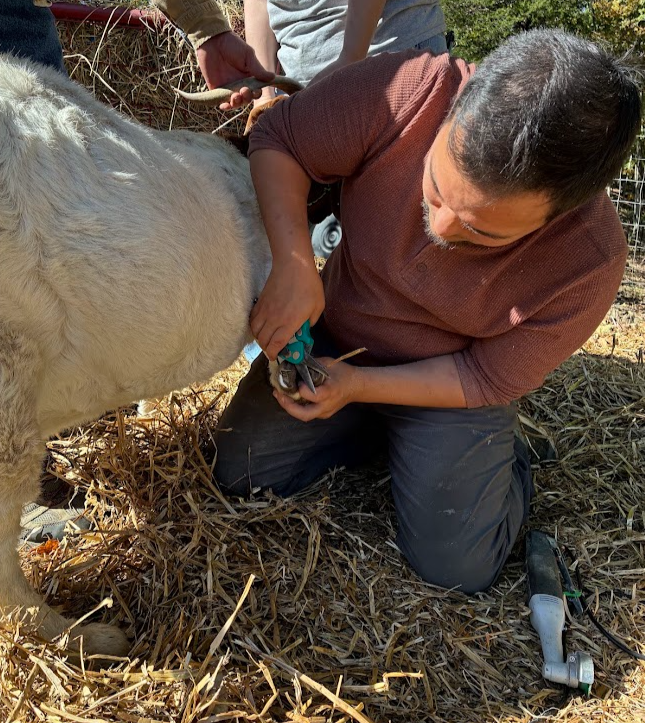
The lift gives us a complete view of each hoof and lets us use tools at angles we couldn’t otherwise reach. That access allows us to address problems such as calluses, hoof wall cracks, and white line disease much more thoroughly.

The Challenges Our Big Pigs Face
Large breed pigs like Yorkshires and Berkshires tend to experience more hoof problems, including cracks and calluses, than our smaller residents. Over many generations, humans selectively bred these pigs to grow large, with little regard for the effects on their longevity or quality of life.
Hoof Care Is Individual
Of course, size doesn’t tell us everything. Big Boss Charity is considerably smaller than a Yorkshire and has a predominantly feral background. At well over 10 years old, she only recently needed her first hoof trim.
Most of our smaller pigs, meanwhile, come from breeds like Kunekunes and Potbellied pigs, which have also been shaped by generations of selective breeding by humans. They may not develop cracks and calluses as often as our big pigs, but they still need regular hoof trims.

Knowing When to Go Further
Before Eli joined us, our approach to hoof trimming was more conservative. There are good reasons to be cautious. Trimming too far can injure sensitive tissue and cause bleeding, while leaving a hoof improperly balanced can create further hoof and mobility problems.
When a Small Crack Becomes a Bigger Problem
But being too conservative has its own risks.
A crack can leave a pocket where debris collects and bacteria grow. If the damaged area isn’t fully addressed, infection can develop deeper in the hoof. An abscess in a pig’s hoof can be particularly difficult to manage.
Much of this work involves identifying hoof wall that has split or separated from the structures beneath it. Removing that damaged, detached material helps eliminate pockets where bacteria or fungi can persist and gives the hoof a better chance to heal.
Knowing how much to remove takes experience, confidence, and careful judgment. We want to address the problem as thoroughly as we safely can while protecting healthy tissue and maintaining the hoof’s balance.
Learning from Our Veterinary Partners
Our shift toward this approach began with advice from Kati, one of the veterinary technicians we work closely with at the University of Tennessee. During a day working alongside us at the sanctuary, she recommended that we address some hoof cracks more thoroughly. Leaving part of the damaged area behind could mean returning to the same unresolved problem at the next trim.
I took that advice to heart and began putting it into practice. When Eli joined the team, his experience helped us take that work further.

The Art of Hoof Trimming
Eli comes to us not only with a lot of hoof trimming experience but with two other aspects that were key to enhancing our hoof trimming skills.
Getting to the Root of the Problem
First, Eli approaches his work in animal care with a deep desire to address the health challenges they face at a root level. He spends a lot of time researching and brainstorming different approaches to meet the challenges their genetics present in a sanctuary setting. Shrugging his shoulders and saying “that’s just the way it is” is never his approach.
An Artist’s Eye, a Teacher’s Patience
Beyond his love of animal care, Eli also comes to us as a skilled artist. Just like a sculptor sees a masterpiece in a block of marble, Eli sees a healthy hoof behind any crack or defect a pig has. That eye for detail and passion for high quality animal care along with his years of experience made him the right person to help enhance the skills of our entire team. He’s a great and patient teacher who helps all of us approach hoof issues aggressively and with confidence.
Different Strengths, Shared Purpose
Everyone on our team brings different skills and interests to the sanctuary. Part of my job is recognizing those strengths and helping put them to work for our residents.
Christa brings an unwavering attention to detail and a commitment to consistent care. Sunshine has the biggest go-getter attitude of anyone I’ve worked with and is always willing to tackle physically demanding work with a smile. Wendy has an incredible ability to inspire our team to do whatever it takes to give the animals the best lives possible, and to inspire others to support that work.
Then there are the many volunteers who share their time, skills, and dedication with Odd Man Inn. Our residents benefit from all of them.
As we head into another season of hoof trimming, I’m grateful for a team that keeps learning from one another. A suggestion from a veterinary partner, a caregiver’s practiced eye, and the patience to teach someone else all become part of the care we provide.
For the pigs, that work means healthier hooves and more comfortable days. That’s a pretty good reason to look forward to fall!