Gloucestershire
Old Spots
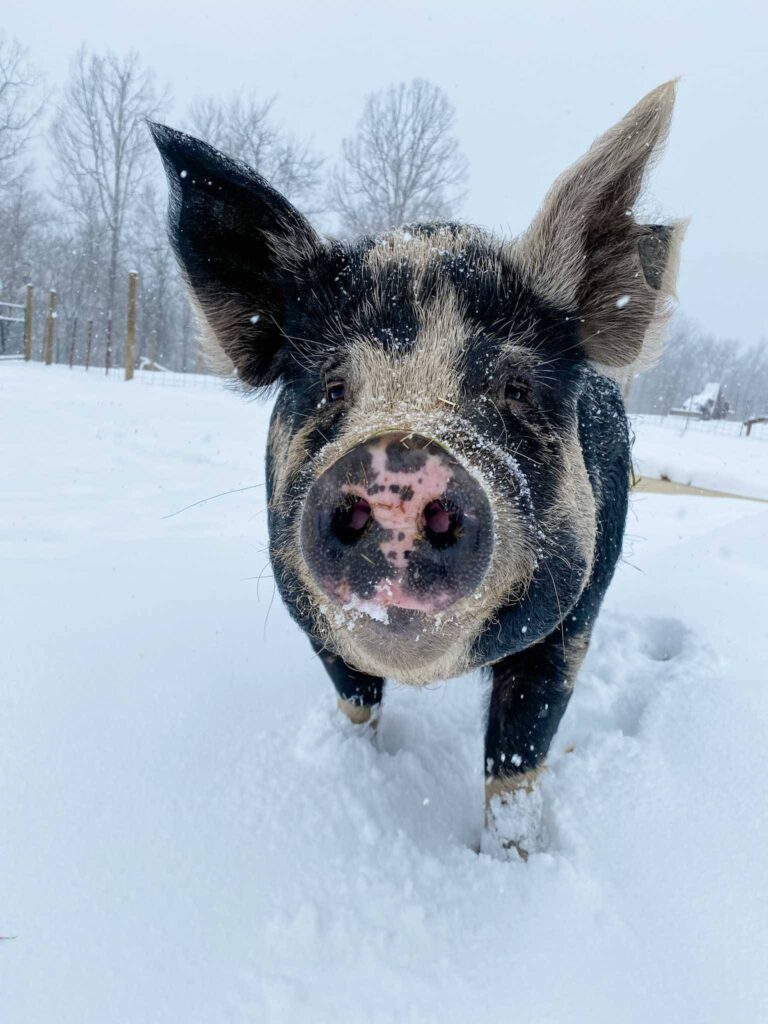
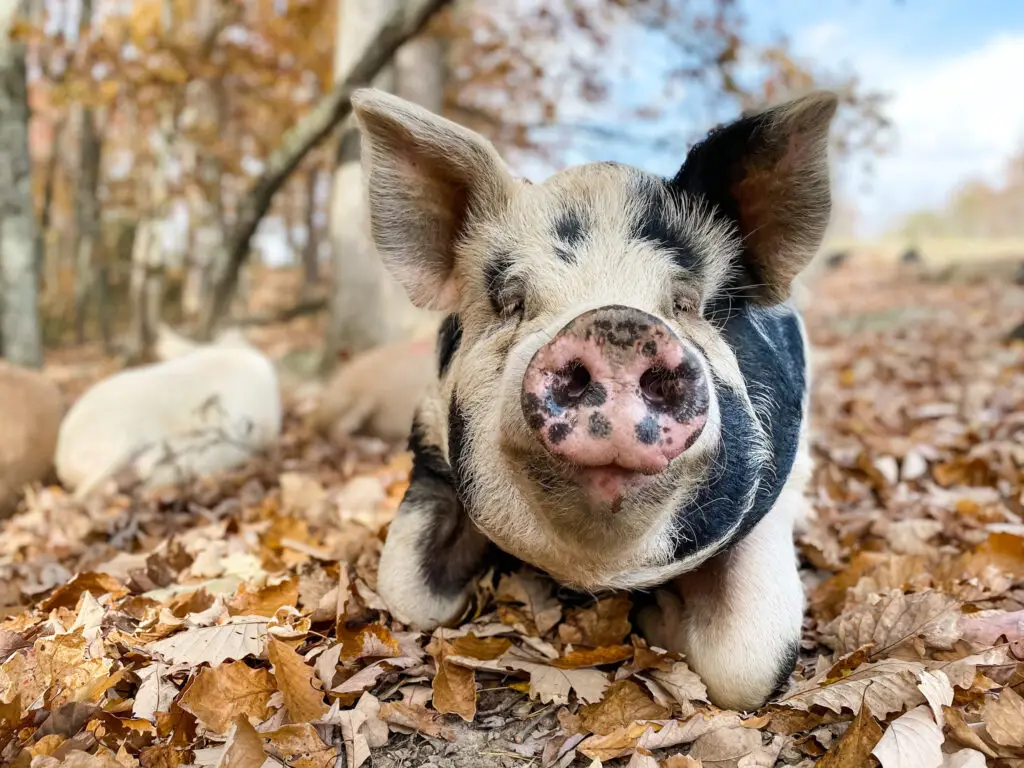
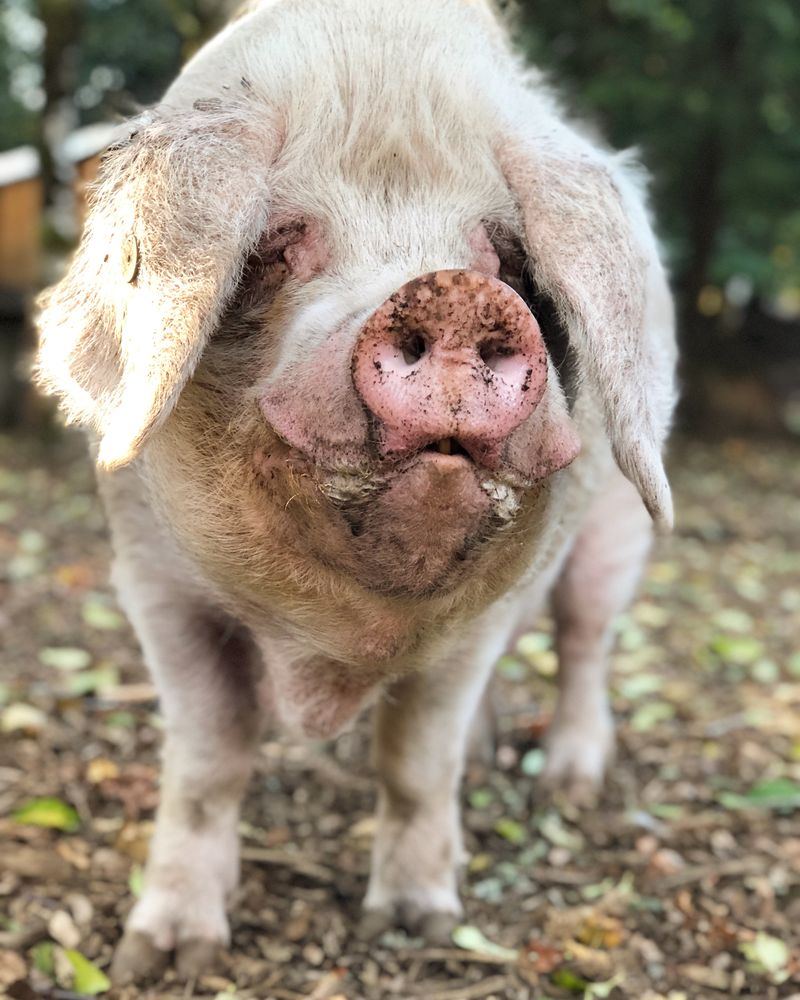
Pale coats with black spots and large, floppy ears give Gloucestershire Old Spots their distinctive appearance. Their long association with English orchards earned them another name: orchard pigs. Here, the Sanctuary Babes have their own stories to share.
The orchard pigs of Gloucestershire
Gloucestershire Old Spots come from the Berkeley Vale, beside the River Severn in southwest England. Orchard fruit and dairy byproducts helped sustain pigs on the area’s small farms. The breed society formed in 1913, but spotted pigs had been familiar locally for much longer. Their precise ancestry is not settled. [1, 2]
The nickname “orchard pig” comes with folklore: their spots were supposedly bruises from falling apples. It is a story, not an explanation of their coloring. Nor were Old Spots the first pedigreed pigs; the breed club’s narrower claim concerns pedigreed spotted pigs. [2]

When farming changed, their fortunes changed
As intensive pig farming expanded after World War II, breeds associated with outdoor farming lost ground. Gloucestershire Old Spots became rare, and breeding organizations worked to preserve them. [1]
That history shows how human decisions shape the lives and populations of fellow animals. Sanctuary offers another way to relate to them: learning who each resident is and providing care throughout their life.
Gloucestershire Old Spots pig health and care
A history of outdoor farming makes room to explore an especially fitting part of this story. Good care also includes shelter, comfort, and attention to the needs of each resident.
Space for everyday discoveries
Breed accounts describe Old Spots as capable foragers with a generally placid disposition. Neither reputation is a promise about a particular pig. Sniffing, rooting, and choosing where to explore are opportunities to offer, not behaviors to demand. A quiet resident and an outgoing one may share the same spots. [1, 3]
Protection from sun and heat
Shade and suitable cooling areas help pigs stay comfortable in warm weather. Caregivers also pay attention to exposed skin and provide sun protection where needed. Fresh water and dry areas should remain available alongside wallows. [3]
Meet the individuals
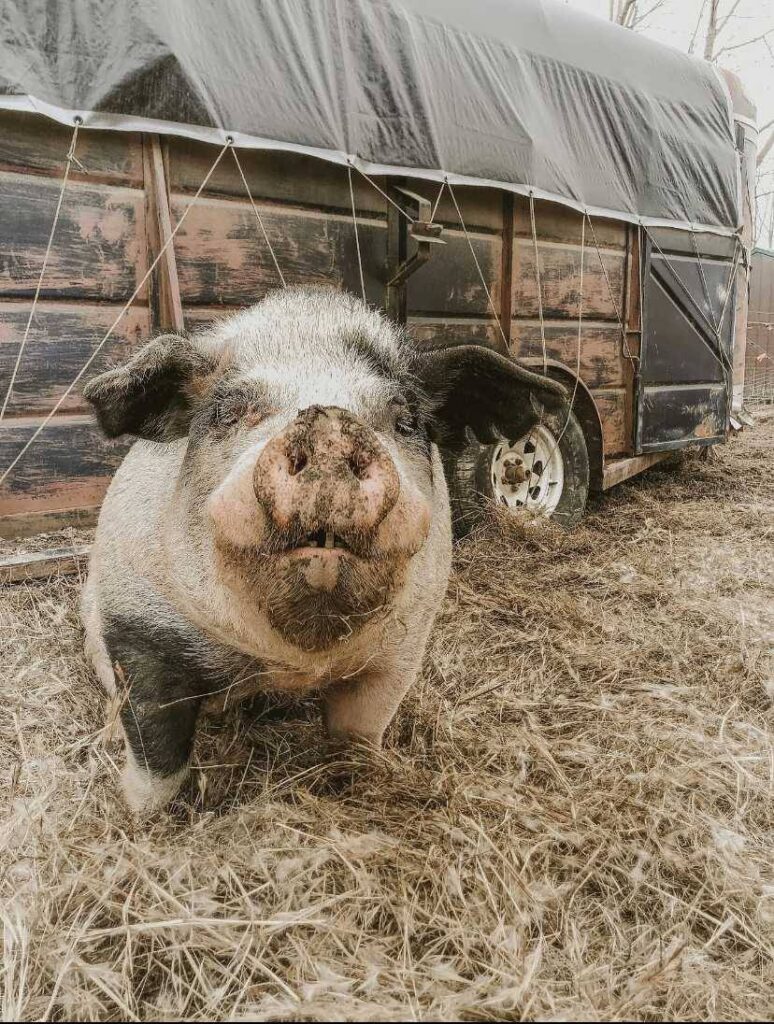
Wynken brings a very particular expression to this breed: a magnificent side-eye. She and her siblings Blynken and Nod were already a bonded trio when Odd Man Inn took over the Tennessee property. Their shared history matters more than a pedigree. Follow the profiles below to meet the individuals, and the memorials to remember those who have passed.

Remembering those who have passed
Their lives remain part of this sanctuary. Read their memorials and remember the individuals behind the breed name.



Look beyond the breed
Artificial selection
Explore how human choices shape animals’ bodies and lives.
The Learning Center
Follow your curiosity and keep learning about the animals behind the labels.
Caring for a pig?
Pig School offers free support from Odd Man Inn’s animal caregivers for sanctuaries, micro-sanctuaries, and private homes caring for farmed animals.

Gloucestershire Old Spots People
For the people who love these Sanctuary Babes. Explore our Gloucestershire Old Spots People tee, featuring original artwork by vegan artist Mor Spicer.
- The Livestock Conservancy: Gloucestershire Old Spots.
- Gloucestershire Old Spots Pig Breeders Club: Breed History.
- The Open Sanctuary Project: Creating a Good Home for Pigs.
Images: Wynken and Sally Mae, Odd Man Inn media library.