

American
Guinea Hogs
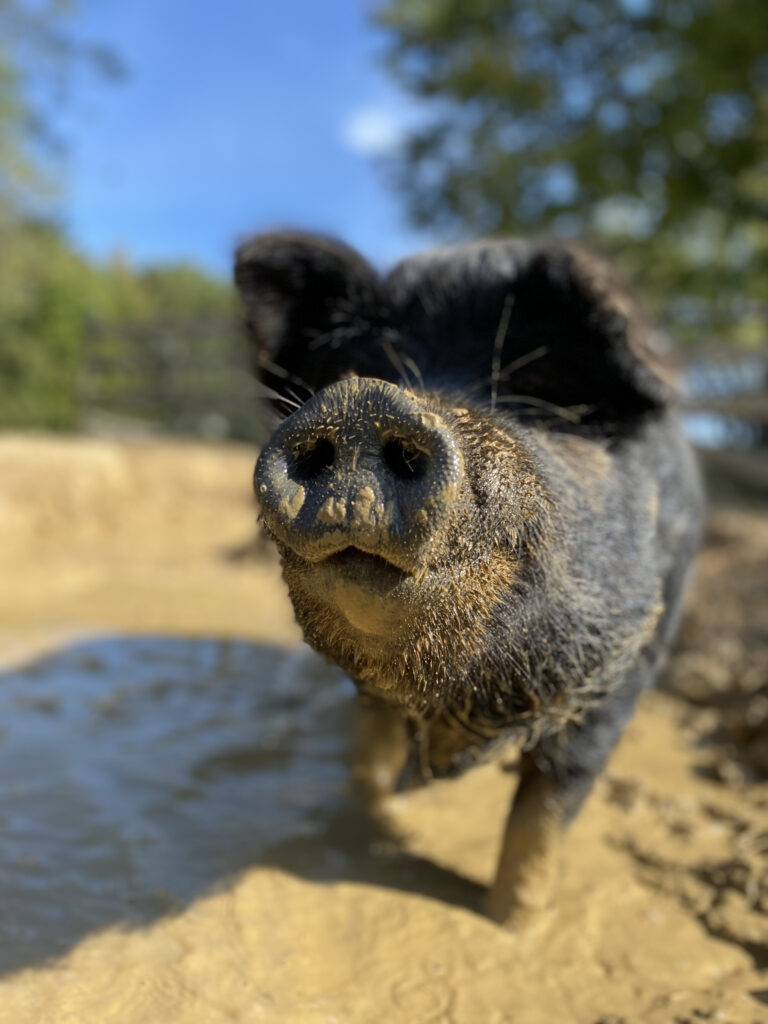
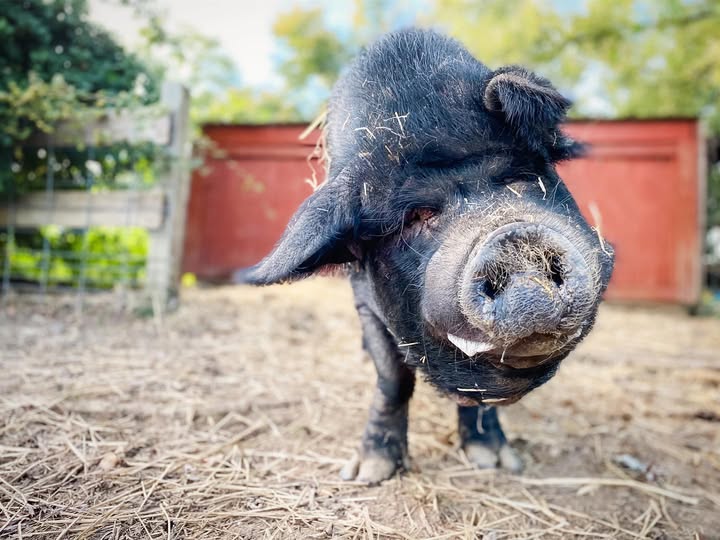
American Guinea Hogs are smaller than many familiar farmed pig breeds, with black bristles and upright ears. Small does not mean simple: they need room to explore, suitable nutrition, companionship, and attentive lifelong care, just like their larger fellow animals.
An American homestead history
American Guinea Hogs are associated with small Southern homesteads, where pigs foraged around yards, woods, and orchards. Their exact ancestry is uncertain, and historical use of the name “Guinea” does not establish a simple, uninterrupted line to today’s breed. [1]
As those small-farm systems disappeared, Guinea Hogs survived in isolated pockets. The Livestock Conservancy estimated fewer than 400 in 2009. That history helps explain their rarity and the variation within the breed: a surviving population is not a collection of identical animals. [1, 2]

A different kind of selection
The Guinea Hog’s compact build and reputation for foraging reflect a different agricultural history from breeds selected for rapid growth in intensive systems. “Smaller,” however, does not mean miniature, maintenance-free, or suited to any home. Size alone tells us little about the space, companionship, and lifelong support one individual will need. [1, 2]
Guinea Hog health and care
Thoughtful feeding is an everyday priority. Veterinary planning also benefits from keeping up with new research, including findings about less common breeds.
Feed for body condition
A talent for foraging does not mean grass alone provides a complete diet. Nutrition needs change with age, activity, and health; excess concentrated feed can also be a problem. Body condition and a veterinarian-informed feeding plan matter more than a fixed portion based only on the breed name. [1]
Plan ahead for anesthesia
A 2026 report described genetically confirmed malignant hyperthermia, a severe anesthetic reaction, in one American Guinea Hog. The report highlights the value of discussing genetic screening and an anesthesia plan with the veterinary team before procedures. [3]
Meet the individuals
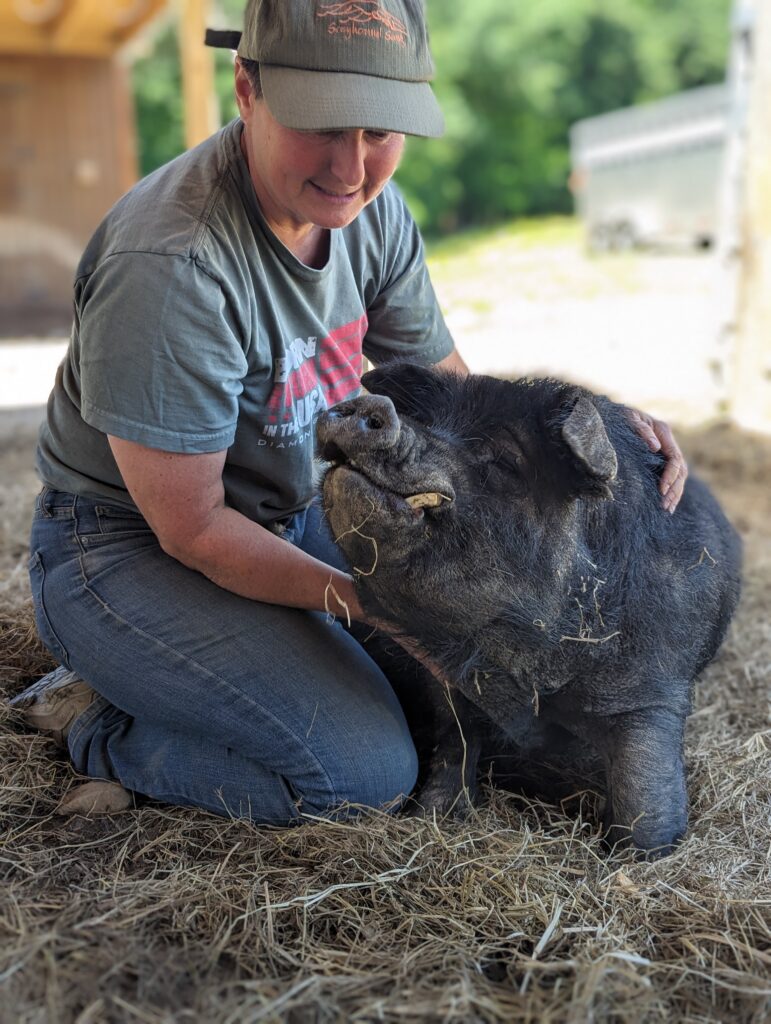
Eppah came to Odd Man Inn after severe injuries that ultimately required a leg amputation. Her care is shaped around access to the things she loves: snacks, brushing, sun, mud, and time snuggled with her friend Frances. Her mobility needs are her own, not a breed characteristic. Her enthusiasm is a reminder to look past a medical history and meet the whole pig.

Remembering those who have passed
Their lives remain part of this sanctuary. Read their memorials and remember the individuals behind the breed name.
Look beyond the breed
Artificial selection
Explore how human choices shape animals’ bodies and lives.
The Learning Center
Follow your curiosity and keep learning about the animals behind the labels.
Caring for a pig?
Pig School offers free support from Odd Man Inn’s animal caregivers for sanctuaries, micro-sanctuaries, and private homes caring for farmed animals.

Wear your love for the Sanctuary Babes
Find a little sanctuary joy in the Odd Man Inn store. Explore our apparel collection, including the Sid the Swamp Pig tee shown here.
- The Livestock Conservancy: American Guinea Hog — history and feeding considerations.
- American Guinea Hog Association: Breed Description — appearance.
- Deal and colleagues (2026): First report of malignant hyperthermia syndrome in an American Guinea hog — a single clinical case.
Photographs: Eppah and Biscuits at Odd Man Inn.