
Hereford
Pigs
A red body with a white face and white feet gives Hereford pigs their familiar appearance. The pattern inspired their name because it resembles Hereford cattle. Behind that recognizable coat is a fellow animal whose personality and care needs deserve attention of their own. [1]
An American breed developed in the 1920s
Hereford pigs are an American creation of the 1920s. Breeders crossed Duroc, Chester White, and Poland China pigs, selecting a red body with a white face and feet that recalled Hereford cattle. John Schulte of Iowa was among the breeders whose pigs established the population. [1, 2]
The connection to cattle went beyond a name: the Polled Hereford Cattle Registry sponsored the National Hereford Hog Record when it formed in 1934. One hundred pigs entered the foundation record. Popularity later declined as commercial farming favored other crosses. This relatively young breed tells a very American story of deliberate selection, changing markets, and the people who kept a recognizable line going. [1]
Recognizable markings, a quieter reputation
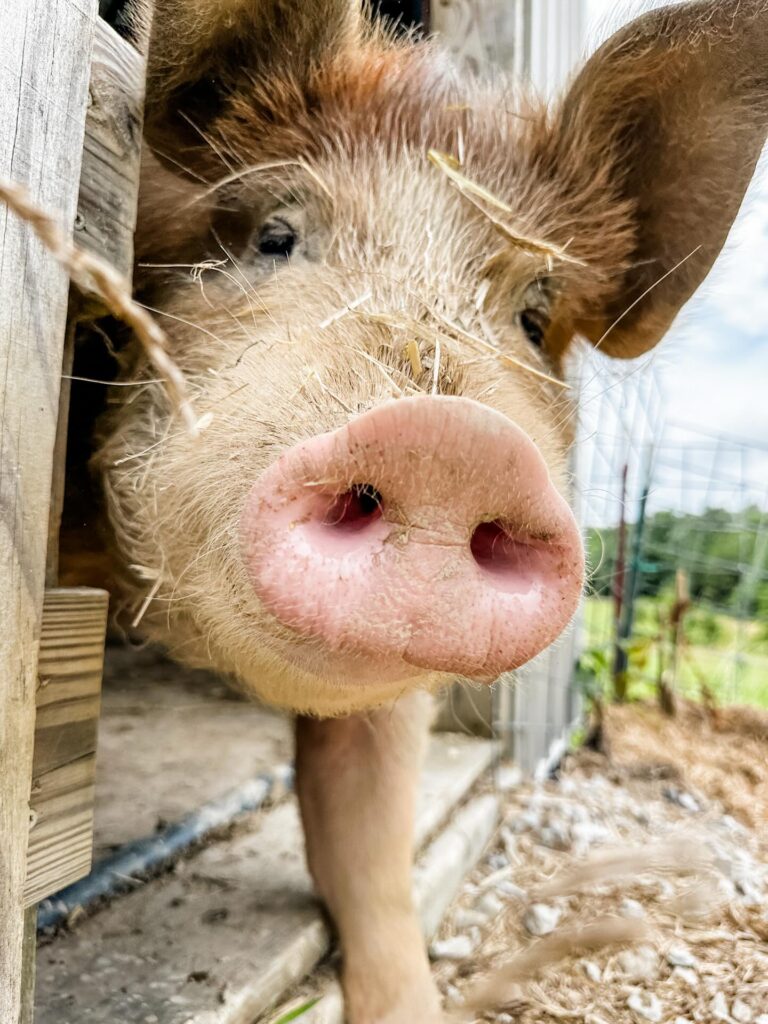
A Hereford’s red coat and white face make the family resemblance to Hereford cattle easy to spot. The breed’s reputation for a quiet temperament helped make it familiar beyond large commercial farms. Breeding for appearance and selecting for manageable behavior are both human choices, but neither erases individual differences. [1, 2]
Conservation history is not always a story of continuing decline. The Livestock Conservancy graduated Hereford pigs from its Conservation Priority List in 2024, following recovery in their numbers. That milestone tells us about a population; Maple’s recovery and Susie-Q’s gradual introduction tell us about the lives within it. [1]
A coat pattern chosen by people
The red-and-white pattern did not appear because pigs needed to resemble cattle. People preferred it and chose which pigs would become parents. Body shape and growth also mattered to the farmers developing the breed. These choices explain the familiar silhouette; they cannot tell us who an individual pig will be. [1, 2]
The Livestock Conservancy describes Herefords as generally quiet and docile. That is a breed description, not a promise that every newcomer will welcome touch or feel safe immediately. At Odd Man Inn, getting to know a pig still takes time, observation, and room for them to make choices. [1]
Hereford pig health and care
A recognizable appearance is useful for understanding history. Care is more personal: it follows each resident’s body, behavior, and changing needs.
Growing into a safe home
Maple was a sickly runt when she was rescued from a production facility in the Chicago area. Months of foster care and veterinary attention helped her recover before she came to sanctuary. Her story is a reminder to plan for the full-grown pig, not only the small one who first needs help.
Space to root, comfortable places to rest, and care that changes as a resident grows all belong in that long-term plan.
Trust has its own timetable
When Susie-Q arrived, the call had described a potbellied pig. She was actually a young, already large farmed pig whose previous homes could not meet her needs. Her July 2026 update describes supervised walks after breakfast, while the herd was resting, so she could explore without the pressure of a crowd.
That kind of introduction follows the individual, not a reputation for being an easygoing breed.
Meet the individuals
Maple and Susie-Q have very different beginnings. Their profiles follow the lives behind those red-and-white faces. Our Hereford story also includes Grace, Odd Man Inn’s first big pig, whose surgeries and years with her chosen family helped shape the sanctuary’s approach to lifelong care.


Remembering those who have passed
Their lives remain part of this sanctuary. Read their memorials and remember the individuals behind the breed name.

Look beyond the breed
Artificial selection
Explore how human choices shape animals’ bodies and lives.
The Learning Center
Follow your curiosity and keep learning about the animals behind the labels.
Caring for a pig?
Pig School offers free support from Odd Man Inn’s animal caregivers for sanctuaries, micro-sanctuaries, and private homes caring for farmed animals.

Hereford People
Show your love for Grace and her fellow Hereford pigs with the Hereford People tee, featuring original art by vegan artist Mor Spicer.
Find colors and sizes in the Odd Man Inn store.
- The Livestock Conservancy: Hereford pigs — origins, breed development, and markings.
- Oklahoma State University: Hereford pigs — foundation breeds and early breed history.
- The Open Sanctuary Project: Introduction to Pig Care — lifelong, individual-centered care.
Photographs: Maple and Susie-Q at Odd Man Inn.