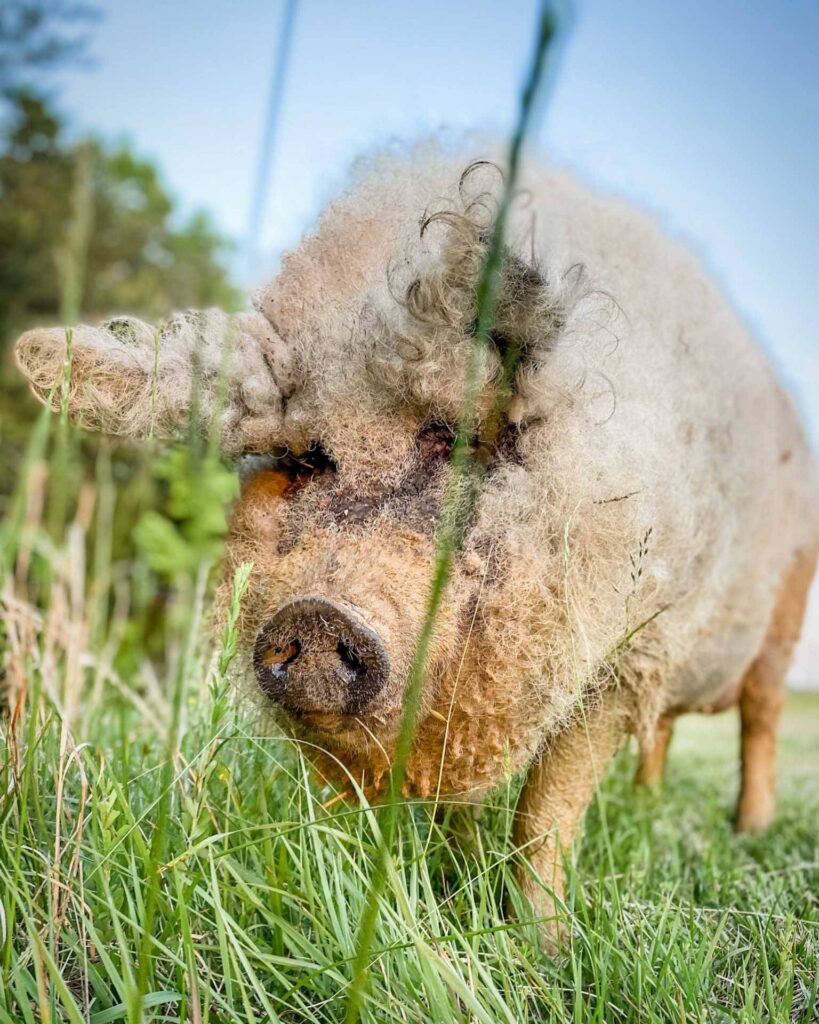
A curl-covered coat makes Mangalitsas easy to recognize. Beneath the floof is a pig with a long history of human breeding choices and a life full of their own preferences.
The curls have a history. Mangalitsas developed in Hungary from local pigs crossed with Serbian Šumadija pigs. In 1833, Archduke Joseph brought a small breeding group to his estate, a founding contribution to the development of the Hungarian Mangalitsa. These were deliberately bred pigs, selected for their ability to store fat, not a pig-sheep hybrid or an untouched wild breed.1
The British Pig Association recognizes blonde, red, and swallow-bellied varieties. The last combines a dark upper body with a pale underside. Their curly hair changes with the seasons, becoming longer in winter and shedding during warmer months.2, 3
As agricultural demand shifted, the breed nearly disappeared. The British Pig Association reports fewer than 150 breeding sows worldwide in 1993, followed by a recovery through dedicated breeding efforts. That figure describes breeding females, not every Mangalitsa alive.2
Remembering Annabelle, a much-loved Sanctuary Babe.
HUMAN CHOICES
A body shaped by human priorities
The term “lard-type” describes what people wanted from Mangalitsas: bodies that could provide substantial quantities of fat. Later, demand for leaner pigs pushed them aside; renewed markets for specialty products helped bring the breed back. Both changes were driven by the value people placed on pigs’ bodies.1, 2
Preserving a breed and protecting an individual are different things. At OMI, a Mangalitsa’s future does not depend on what can be taken from them. Sid gets to make swamps. Annabelle got to grow old among friends. Sanctuary gives those everyday lives room to unfold.
Sid the Swamp Pig made an impression before he even arrived. When OMI went to collect the stray pig being helped by Kitsap Humane Society, we expected someone small enough for a Honda Element. Sid was already about 400 pounds. We went home for a truck and trailer.5
His preferred occupation is written into his name. Sid roots, builds swamps, and returns with twigs and dirt worked into his curls. He shares his life with a familiar crew of pigs who originally came from Washington. His story gives “friendly” and “active” a face, without pretending every Mangalitsa is the same.5
Annabelle came to OMI in 2022 after originally being surrendered as a small piglet considered not worth raising. Her sanctuary life included friends, daily swamping, and snacks from caregivers. As mobility became difficult, her care changed around her comfort and dignity. We remember her as a friend, not a representative sample of a breed.6
HEALTH & EVERYDAY CARE
Mangalitsa pig health and care
A thick coat can hide changes in body condition. Good care means paying attention to the whole pig, with nutrition, comfortable surroundings, and regular health checks shaped around each resident.
Look beneath the curls
A glorious coat can hide changes in body condition. The British Pig Association cautions that evaluating a Mangalitsa takes more than admiring the curls. Regular assessment of weight and body condition, with veterinary guidance, helps caregivers adjust nutrition to the individual rather than feeding to a breed stereotype.3
The coat is longer in winter and sheds in warmer weather. It does not replace shelter, fresh water, shade, or cooling spaces. A wallow offers both relief from heat and a very pig way to enjoy the afternoon.3, 4
Comfort as life changes
Safe footing, dry bedding, and easy access to meals and water support comfortable movement. Caregivers watch for changes in activity and mobility, adjusting the environment and veterinary care as residents age.4
Annabelle’s later years included extensive support for her mobility and comfort. Her memorial remembers a life of swamping, snacks, and friendship.6
LIFE AT ODD MAN INN
Meet the individuals
Meet the individuals in our Mangalitsa directory. Their friendships, habits, and favorite places tell us far more than a breed name can.