Long before becoming companions in American homes, pot-bellied pigs were bred and raised for meat in Vietnam. Their compact bodies, early maturity, and ability to forage made them well suited to small household farms. They are still raised for food in Vietnam today.1, 5
Imported into Canada for zoos in the 1980s, pot-bellied pigs entered the U.S. pet trade in 1986 and became popular companions. Later crossbreeding produced the wide range of sizes, colors, and ancestry seen in pot-bellied pigs today.2, 6
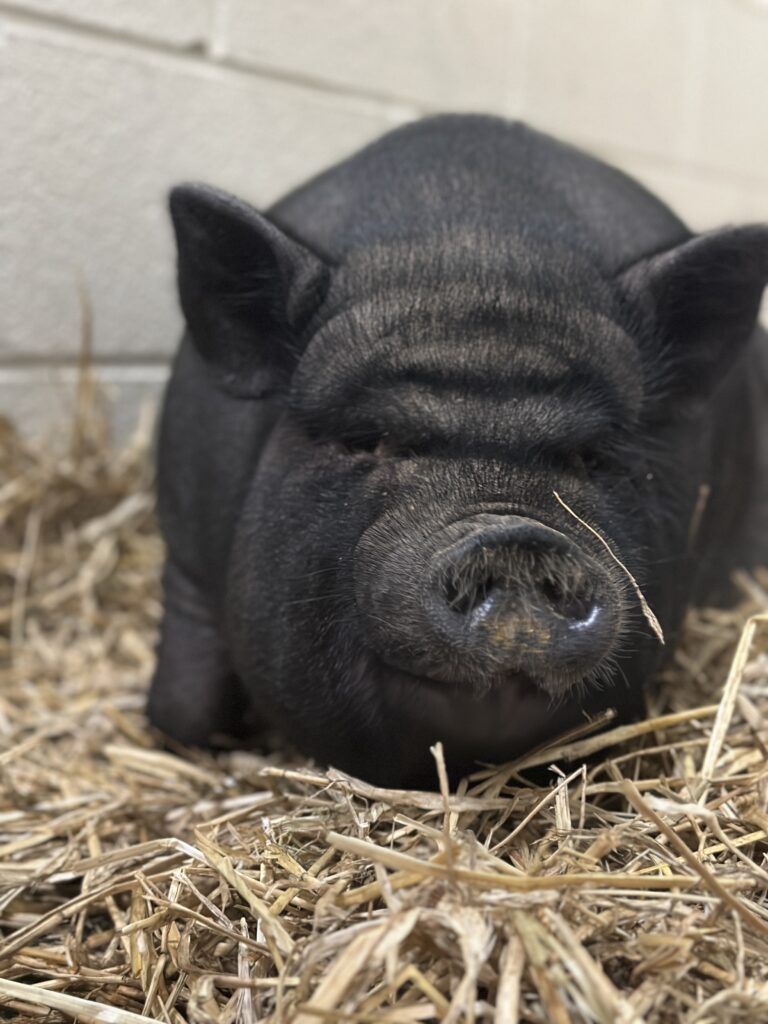
Domino, at home at Odd Man Inn.
HUMAN CHOICES
How human choices shape pot-bellied pigs
Selective breeding has shaped the pot-bellied pig’s size and appearance over generations. Those choices carry responsibilities: every pig needs lifelong care, room to explore, and companionship. At Odd Man Inn, we care for each individual’s health, comfort, and relationships.
Joint pain and vision problems can affect a pot-bellied pig’s ability to move, explore, and enjoy Sanctuary Babe life. Understanding these health concerns helps animal caregivers at Odd Man Inn provide better care, recognize changes, and get the right veterinary support.
Mobility and joint health
Arthritis can make standing, walking, and getting comfortable painful. It can affect pot-bellied pigs at any age. Extra body weight can add to the burden on painful joints.
Care focuses on comfort: an appropriate diet, accessible spaces, hoof care, and veterinarian-guided pain management.3
Vision and eye health
Fatty tissue around the eyes can become thick enough to obstruct a pig’s view, sometimes called “fat blindness.” It is not the only cause of vision loss: eyelid and eye diseases also need veterinary assessment.
Protecting sight means weight management, noticing changes early, and adapting the environment to each pig’s needs.4
POT-BELLIED LIFE AT ODD MAN INN
Meet the individuals
Each resident brings their own friendships, habits, and ways of moving through the world. Get to know the pot-bellied pigs who call Odd Man Inn home.