Odd Man Inn may be best known for rescuing and caring for large-breed pigs, but nine goats also call the sanctuary their home. Each goat resident receives the same thoughtful, individualized care that is standard for every Sanctuary Babe—regardless of species.
Much of this care happens far from public view. Alongside nutritious meals, fresh bedding, clean water, hoof care, and enrichment, our caregivers continually monitor each resident for changes that could signal a health concern.
Our Animal Care Manager Daniel recently spent part of his day collecting blood and fecal samples from the goats. These samples offer valuable insight into what is happening inside an animal’s body, even when everything appears “normal” on the outside.
The Challenge of the Barber Pole Worm
The barber pole worm (Haemonchus contortus) is a blood-feeding internal parasite that can cause potentially life-threatening anemia in goats. It can also develop resistance to deworming medications, particularly when those medications are used too frequently or incorrectly.
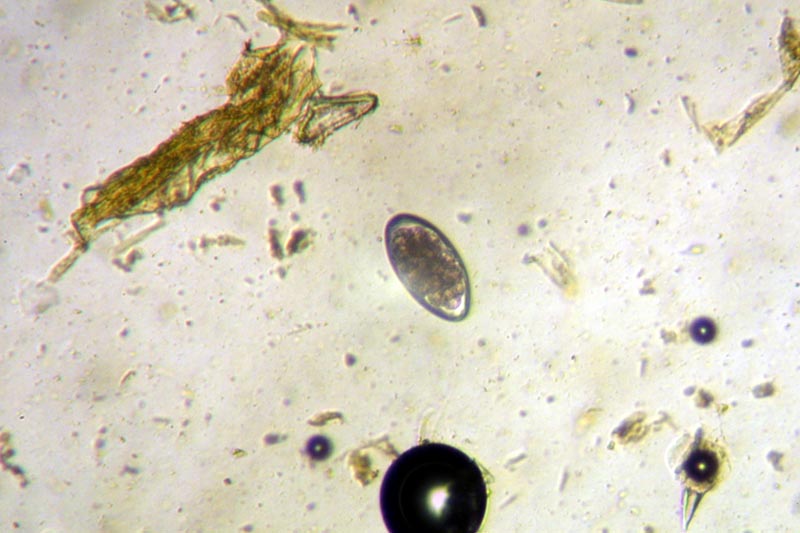
In the picture: A Haemonchus contortus (barber pole worm) egg under magnification. Photo by Jeff Ellison, USDA Agricultural Research Service. Public domain via Wikimedia Commons.
When an entire group is treated routinely, susceptible parasites are killed while resistant parasites survive and reproduce. Over time, this can make commonly used medications less effective.
That is why Odd Man Inn does not rely on a one-size-fits-all deworming schedule. Daniel combines several forms of assessment to determine whether an individual goat may require treatment.
Starting with What We Can See: FAMACHA Scoring
One of our assessment tools is FAMACHA scoring. This method compares the color of the mucous membrane inside a goat’s lower eyelid with a standardized chart. A healthy red or pink color suggests adequate red blood cell levels, while increasingly pale tissue can indicate anemia.
FAMACHA provides a quick and useful observation, but it does not tell the whole story. Daniel also watches for changes such as weight loss, lethargy, pale gums, poor body condition, and swelling beneath the jaw known as “bottle jaw.”
No single symptom or test result is used in isolation.
Looking for Microscopic Evidence: Performing Fecal Egg Counts
Collecting poop may not be the most glamorous part of sanctuary care, but it is an essential one.
Daniel carefully labels each fecal sample with the resident’s name and the collection date. He then mixes the sample with a flotation solution, strains the mixture, and prepares a specialized McMaster slide for examination under the microscope. Using the slide, he performs a fecal egg count, which estimates the number of parasite eggs per gram of feces.
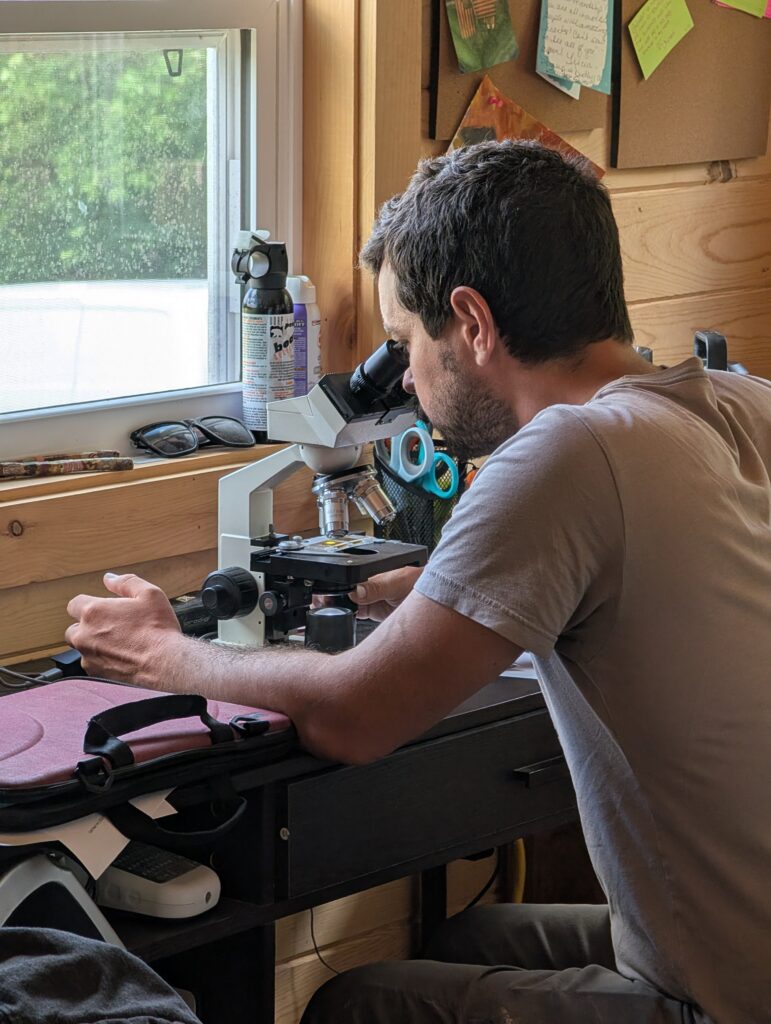
In the picture: Animal Care Manager Daniel examines a McMaster slide under the microscope, counting parasite eggs one tiny square at a time.
Parasites are rarely distributed evenly among a group of animals, even when they share the same environment. One goat may carry a significant parasite burden while another may not need treatment at all. Individual testing helps Daniel determine which goats, if any, require closer attention while avoiding unnecessary treatment of healthy residents.
During the warmer months, when parasite activity is higher, these checks may be performed as often as every two weeks to a month.
Adding Information from a Blood Sample
Blood testing provides the final piece of the picture.
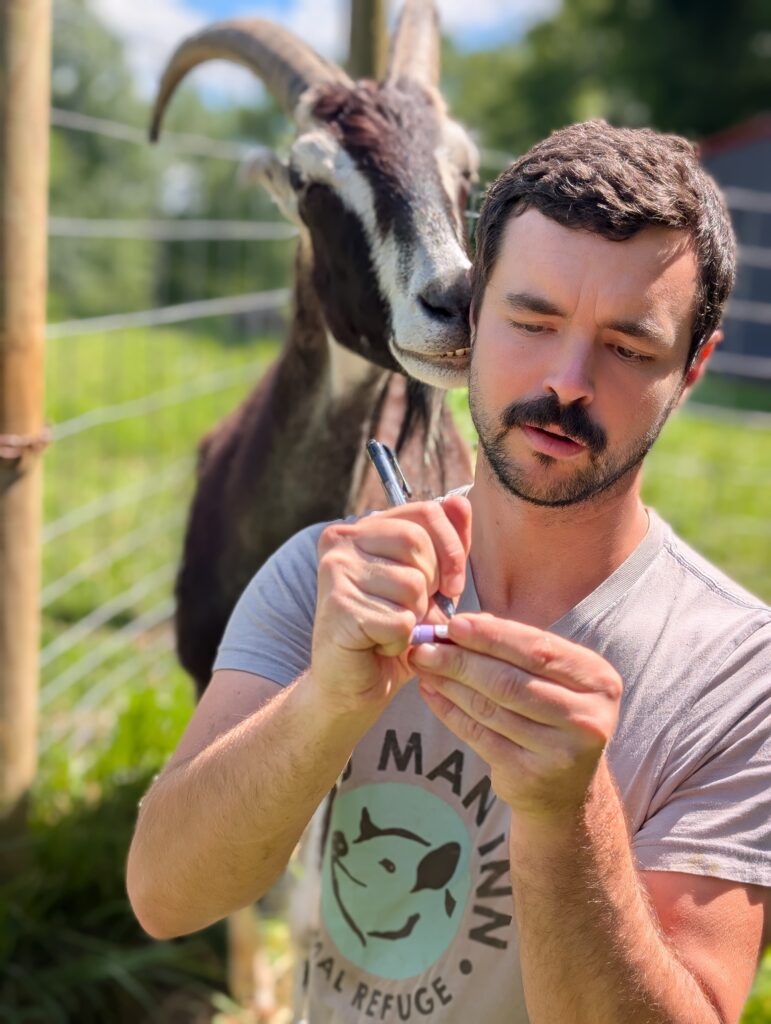
After collecting and carefully labeling each sample, Daniel places a small amount of blood into a capillary tube and spins it in a centrifuge. He then measures the Packed Cell Volume, or PCV—the percentage of the sample made up of red blood cells.

A low PCV may indicate anemia, the core symptom caused by the barber pole worm. Daniel also evaluates total protein, which can provide information about hydration and help place the PCV result in context. For example, dehydration may make a PCV reading appear higher than it otherwise would. Although the barber pole worm is the top cause of anemia in goats, a low PCV in the absence of parasites on their fecal exam could indicate other serious medical concerns, like cancer.
Together, PCV, total protein, FAMACHA score, fecal egg count, and the goat resident’s overall clinical condition provide a much more complete assessment than any one measurement could offer.
Why Targeted Treatment Matters
Treating only the goats who need it helps preserve the effectiveness of deworming medications.
Leaving healthy animals untreated maintains a population of parasites that has not been exposed to the medication, a concept known as refugia. These susceptible parasites can dilute resistant ones in the environment, helping slow the spread of resistance.
At Odd Man Inn, individualized care is not simply an approach; it is a foundational commitment of Sanctuary Babe life. Each goat resident is a sentient individual with their own medical history and needs. Testing gives our care team the information needed to understand each goat’s individual health and respond accordingly.
Building a Long-Term Health Record
Daniel enters every result into our animal care software, where each Sanctuary Babe has an individual medical record. These records allow the care team to compare current findings with previous results, recognize trends, document treatments, and evaluate whether an intervention has been effective. They also give our veterinarians at the University of Tennessee useful historical information when a resident needs additional care.
The Importance of On-Site Testing and Its Limitations
Conducting these tests on site allows us to gather information quickly instead of waiting for samples to return from an outside laboratory. When a result or clinical sign raises concern, our care team can consult with our veterinarians and determine the appropriate next step.
It is important to stress that on-site testing does NOT replace veterinary care. It helps us monitor residents closely, recognize potential problems sooner, and provide our veterinary team with useful information.
This quiet, methodical work is an essential part of sanctuary care: knowing what is normal for each resident, noticing when something changes, and using every available tool to help them feel their best.
Learn More About Sanctuary Care of Goats
Nine goats call Odd Man Inn home, each with their own story, personality, medical history, and care needs. Meet Odd Man Inn’s goat residents and learn more about the Sanctuary Babes at the heart of this work.
For a deeper look at goat health and responsible parasite management, watch the July 31, 2025 recording of The Pig Forum, available to all Odd Man Inn Patreon members. Memberships begin at $1 per month.
Building a Goat-Care Program at Your Sanctuary?
If you care for goats at a microsanctuary or farmed animal sanctuary and need help developing a similar testing and recordkeeping program, we invite you to reach out. Our team would be happy to share what we’ve learned and help you think through a program suited to your residents and resources.