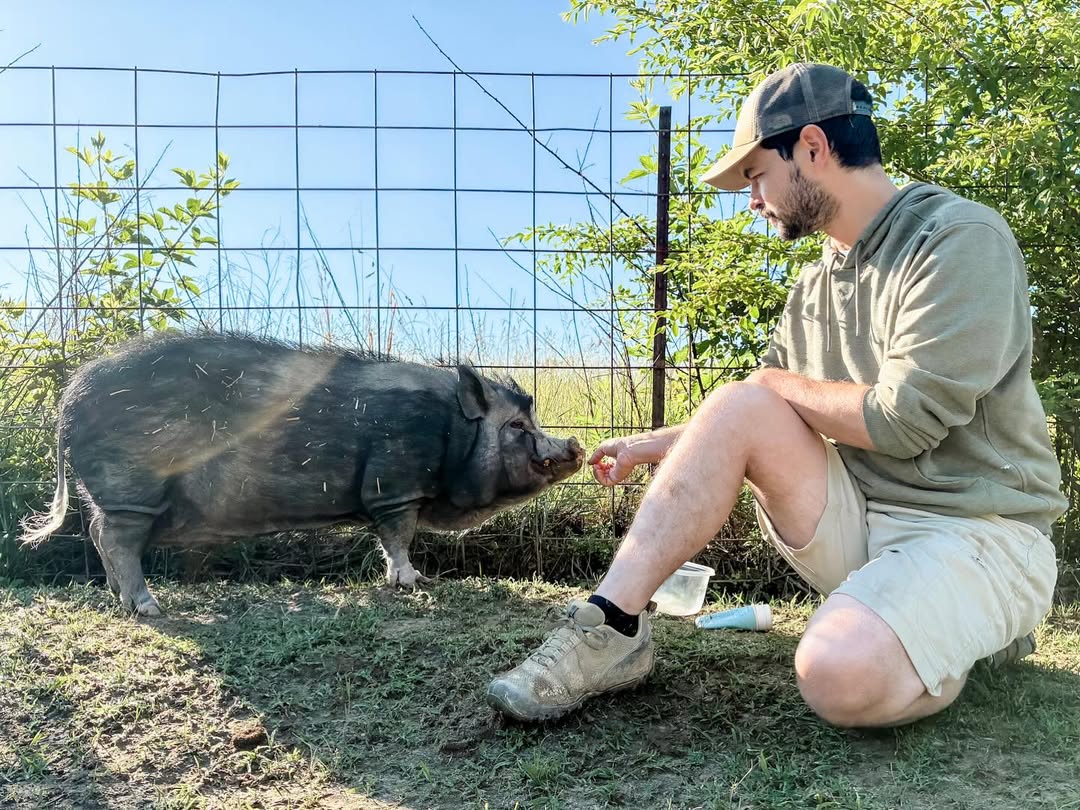
Tennessee summer does not knock politely.
Here in Jamestown, on the Cumberland Plateau, it rolls in with heat, humidity, and a sun that can make the entire sanctuary feel like it has been set to preheat.
Summer heat planning is not new at Odd Man Inn. We have always adjusted schedules, increased water checks, maintained shade structures and swamps, and adapted care for individual Sanctuary Babes as conditions changed.
But summer days are getting hotter, and heat waves are becoming harder to dismiss as unusual. At a certain point, our usual summer precautions need a clear next level.
Winter Is No Longer Our Only Season of Concern
Winter has always demanded careful planning at Odd Man Inn: bedding, shelter inspections, frozen water lines, storm preparation, and added support for elderly or medically vulnerable Sanctuary Babes. Winter still matters. It just no longer gets to monopolize the whole safety conversation.
Extreme heat can be every bit as dangerous to the Sanctuary Babes who call Odd Man Inn home and the humans responsible for keeping them safe. Our Black Flag Protocol builds on our existing summer practices with a shared escalation system—one that tells the team when monitoring increases, outdoor work narrows, and everything except essential care stops.
What the Flags Mean
Our protocol uses the National Weather Service Heat Index—the temperature it feels like when heat and humidity are considered together—to help determine how work proceeds.
| GREEN — Heat Index below 85°F Normal operations continue. Humans are encouraged to stay hydrated and use sunscreen, hats, and electrolytes as needed. |
| YELLOW FLAG — Heat Index of 85–89°F Moderate heat precautions begin. For the Animal Care Crew, that means beginning outdoor work before 8 a.m. whenever possible, rotating physically demanding tasks, and drinking water every 30 minutes. For the Sanctuary Babes, Yellow Flag means checking all water systems twice daily, filling extra swamps, and inspecting shade throughout the property. |
| RED FLAG — Heat Index of 90–99°F Outdoor work is limited to essential care: feeding, medications, veterinary care, water, emergency procedures, and emergency animal transport. Fencing, mowing, trail clearing, construction, landscaping, and other property projects wait. |
| BLACK FLAG — Heat Index of 100°F or higher Only mission-essential outdoor work continues. That includes morning feeding, essential treatments and therapies, medical emergencies, water-system repairs, animal rescue, storm response, and active cooling and heat checks. Construction, routine maintenance, brush removal, volunteer workdays, tours, and outdoor training are postponed. Tractor work stops unless there is an emergency. We don’t transport Sanctuary Babes unless climate control is available. The work does not end. It just narrows to the things that genuinely cannot wait. |
Productivity Yields to Preservation
When Black Flag is declared, our mission shifts from productivity to preservation.
There will always be another fence to repair and another stubborn facilities project staring at us from across the sanctuary. Those things matter, but they are not emergencies. On a Black Flag day, no unfinished project gets to jump the queue.
Human safety is Sanctuary Babe care.
Black Flag Human Care Standards
On a Black Flag day, every person working on the property is expected to carry water and drink as appropriate. Electrolytes are considered every one to two hours during strenuous work. Nobody works alone on a strenuous task, and every radio is checked in the morning so we do not discover a communication failure in the middle of an emergency.
Most importantly, nobody spends more than 40 minutes in the heat without an indoor break.
Breaks and lunches are not skipped.
Dizziness, headache, confusion, nausea, muscle cramps, loss of coordination, or chills despite the heat mean work stops immediately. The person moves into air conditioning and notifies a supervisor. Altered mental status or loss of consciousness means calling EMS.
These are not suggestions. They are STOP signs.
A Different Kind of Watch for the Sanctuary Babes
The Sanctuary Babes cannot check the heat index or tell us that conditions have crossed from uncomfortable to dangerous. They depend on us to notice first.
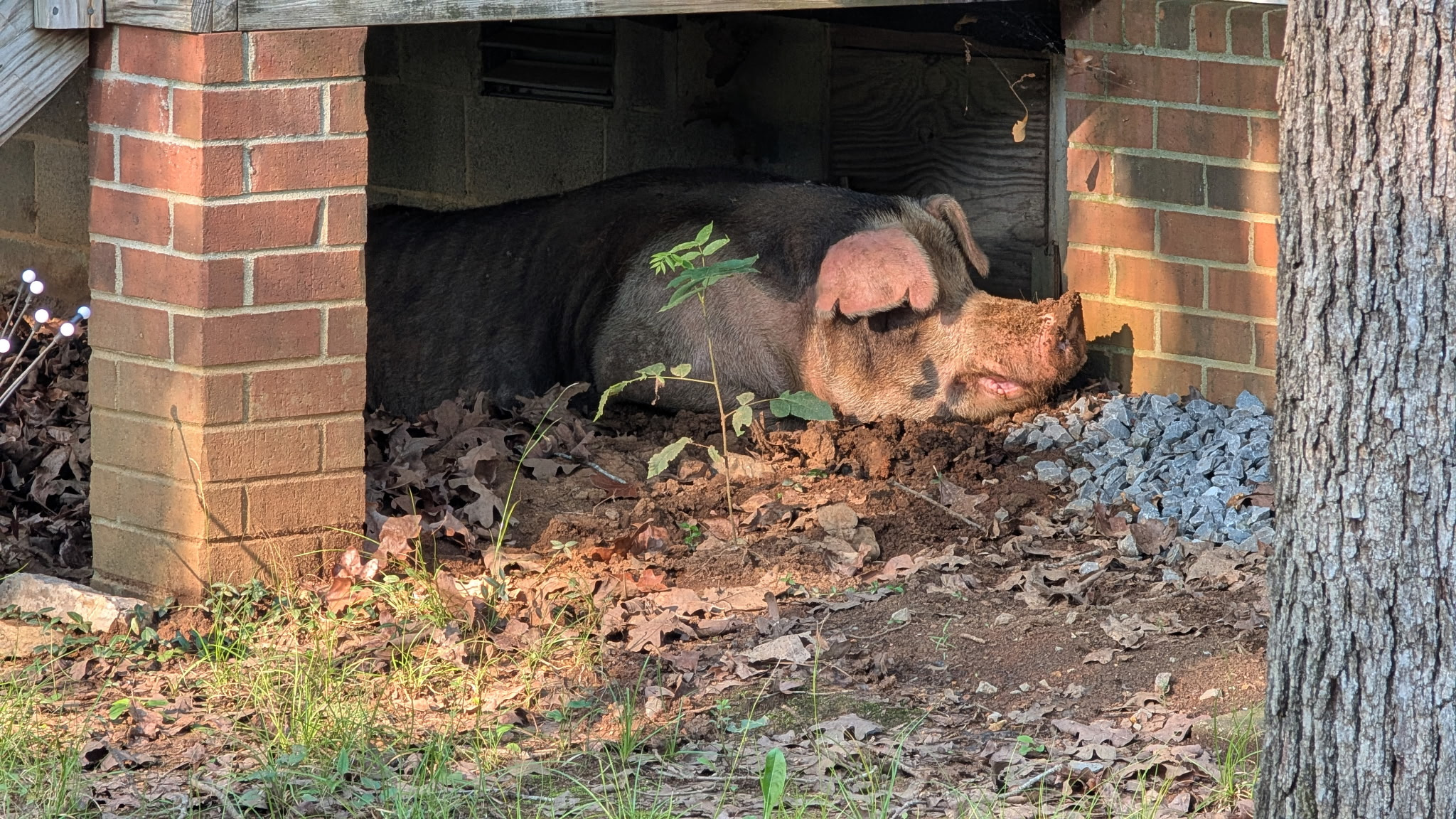
Every Black Flag morning begins with a review of the signs of heat distress, the emergency plan for that day, and the individual residents at highest risk. That list may include our largest pigs, elderly residents, Sanctuary Babes with mobility limitations, those carrying extra weight, and anyone recovering from illness.

This is not generic animal-care advice. It is resident-by-resident care for the specific individuals who live at Odd Man Inn. We know who runs hot. We know who needs extra help getting comfortable. We know who may not show us something is wrong until they are already in trouble.
This protocol gives us a shared framework, but our knowledge of each Sanctuary Babe still guides the work.
This Protocol Will Keep Changing
Our Black Flag Protocol is official, but it is not set in stone. We expect it to change as we use it.
Every extreme-heat day gives us more information: how different areas of the property behave, which systems need more frequent checks, how our cooling support can be improved, and how individual Sanctuary Babes respond.
We will keep listening to the crew doing the work. We will keep paying attention to the residents. We will keep improving the plan. That is what responsible care looks like. You make the best plan you can with the information and resources you have, and then you keep making it better.
This protocol is specific to our property, facilities, crew, and overwhelmingly large-breed pig population, but many of its building blocks are universal. If you are developing a heat protocol for a sanctuary or microsanctuary, please reach out. We are happy to share what we have learned and equally eager to learn from you.