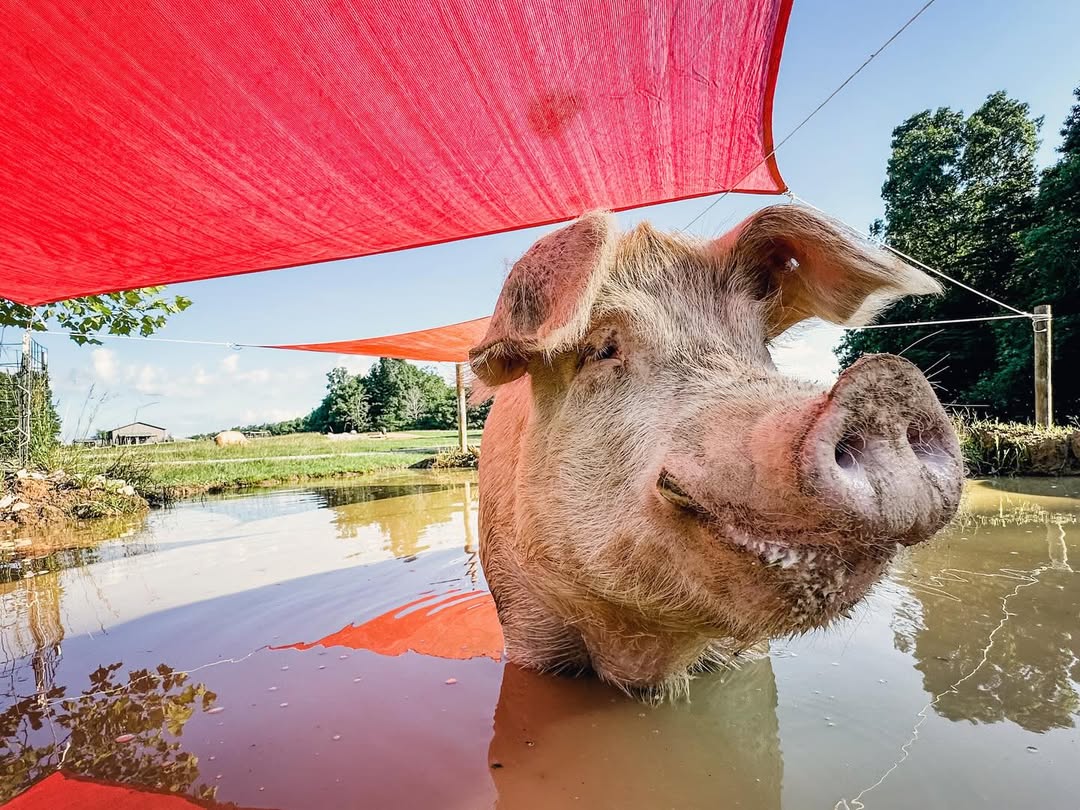
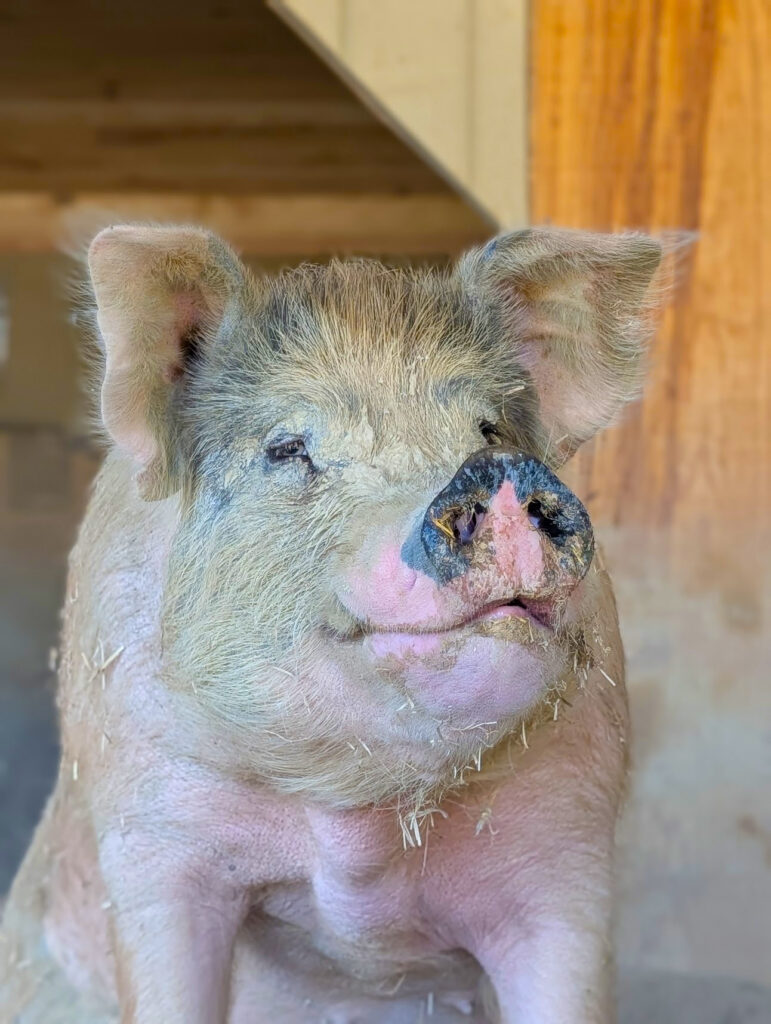
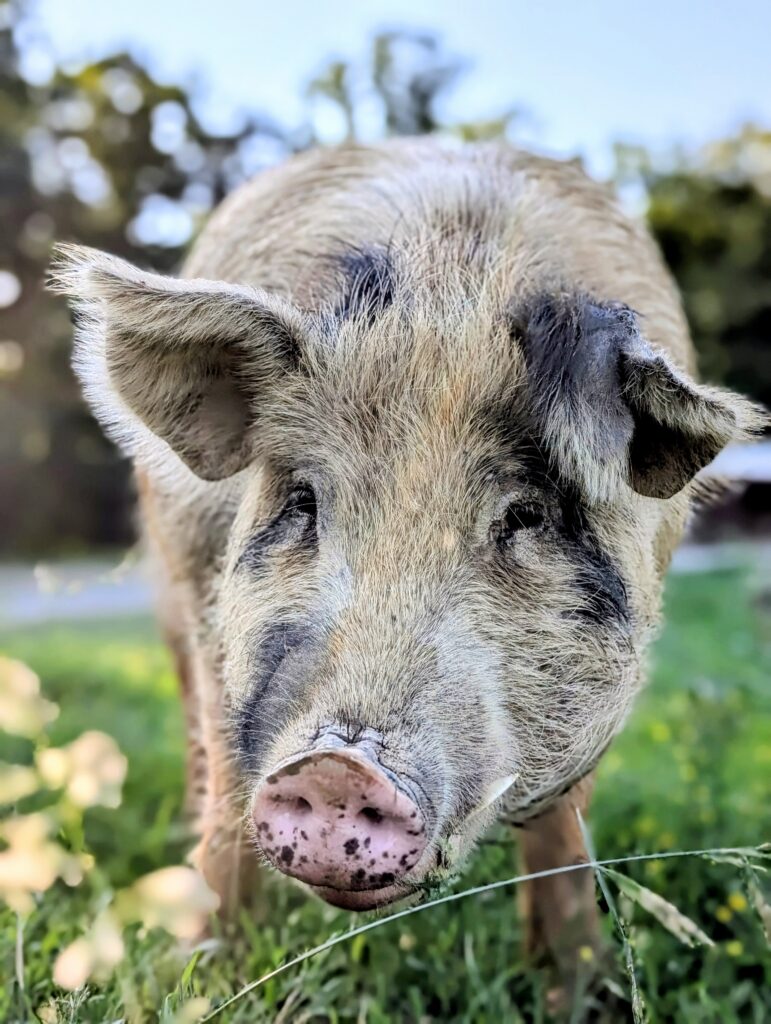
With upright ears, pale skin, and large bodies, American Yorkshire pigs carry generations of human breeding choices. At Odd Man Inn, knowing that history helps us understand the individuals in our care.
The American Yorkshire pig traces its roots to Yorkshire, England, where this breed of gentle giants became known as the Large White. The first Yorkshires arrived in Ohio around 1830. Later imports from Britain and Canada helped shape the breed raised in the United States today.1
Bred and raised for meat, Yorkshires were selected for larger frames, longer bodies, more muscle, less body fat, and larger litters. Their reproductive traits also made them central to commercial crossbreeding. The industry’s nickname, “The Mother Breed,” reflects the value placed on their ability to produce more pigs.1
Ozzie, a young Yorkshire in Odd Man Inn’s care.
HUMAN CHOICES
Bred for their flesh
American Yorkshire pigs have been shaped to grow quickly, develop muscular bodies with little backfat, and produce large litters. Their ability to produce and raise more piglets has made them the foundation of commercial breeding. The animal agriculture industry calls them “The Mother Breed.”1, 8
These choices serve a system that sends pigs to slaughter at around six months old. Sanctuaries gives rescued Yorkshires something that system rarely allows: the chance to grow old.9
Protecting pale skin, supporting comfortable movement, and understanding reproductive demands all matter when caring for Yorkshire pigs. At Odd Man Inn, care starts with each individual’s needs.
Pale skin carries a cost
Yorkshires’ white coloring is part of the breed standard. White skin has also been favored in some pork markets because dark hair roots can remain visible after slaughter and dehairing. For the living pig, pale skin means vulnerability to sunburn.1, 2, 11
Shade, suitable sunscreen and regular skin checks matter. Persistent sores and changing growths need veterinary attention: prolonged ultraviolet exposure is associated with squamous cell carcinoma in pigs with unpigmented skin and sparse hair.3
Fast growth has lasting consequences
The pork industry describes pigs reaching about 280 pounds at just six months old. American Yorkshires have been selected for the growth and leanness that help make this possible. Research in Yorkshire pigs has linked these production traits with joint-development problems and leg weakness.8, 9, 10
For rescued pigs who live far beyond slaughter age, comfortable movement needs lifelong attention. Arthritis, injuries and changing mobility deserve care centered on the individual, with pain relief and veterinary support when needed.4
More piglets than places to nurse
Yorkshires have been selected for large litters. But producing more babies does not ensure that every piglet can get enough milk. When piglets outnumber a mother’s functional teats, competition intensifies and survival suffers.1, 6, 7
In one commercial-pig study, preweaning mortality was 17.9% in litters with two more piglets than functional teats, compared with 7.7% in litters with two fewer. The drive to produce more pigs carries a cost from the beginning of their lives.7
YORKSHIRE LIFE AT ODD MAN INN
Meet the individuals
Each resident brings their own friendships, habits, and ways of moving through the world. Get to know the American Yorkshire pigs who call Odd Man Inn home.
Vande Pol et al.: Litter size relative to sow functional teat number. Controlled study of commercial crossbred pigs, not purebred Yorkshire statistics. The reported preweaning mortality includes low-vitality piglets removed from the study; it should not be read as deaths alone.
Patent US6183955B1: Pig genotyping. Documents a commercial preference for white skin in some markets because dark hair roots remain visible after dehairing; not the sole historical explanation for Yorkshire coloring.